%22%20style%3D%22color%3Argb(240%2C%3Bfont-family%3AArial%3B%22%3E4000AI%3C%2Fspan%3E%26nbsp%3B%3C%2Fspan%3E%3C%2FforeignObject%3E%3C%2Fsvg%3E)

Yes, AI tools can be HIPAA compliant if they execute a Business Associate Agreement (BAA) and implement required safeguards. AIHEB Technologies provides AI-powered software solutions designed to streamline healthcare operations while maintaining strict regulatory adherence. This guide covers the legal framework, technical requirements, and how to verify compliance for AI vendors in 2026. For additional details, review the 4000ai org.
The Legal Framework for AI and HIPAA
Health Insurance Portability and Accountability Act (HIPAA) is a federal law that protects sensitive patient health information from being disclosed without the patient's consent or knowledge. The law applies to covered entities, such as healthcare providers, health plans, and clearinghouses, as well as their business associates. Artificial Intelligence (AI) is a technology that enables machines to perform tasks that typically require human intelligence, such as learning, reasoning, and problem-solving. When AI processes Protected Health Information (PHI), it often falls under HIPAA regulations. For additional details, review the About.
Scope of Application
The HIPAA Privacy Rule and Security Rule govern how PHI is created, received, maintained, and transmitted. If an AI tool accesses, stores, or transmits PHI on behalf of a covered entity, it is generally considered a business associate. This classification triggers specific legal obligations. The tool must adhere to the same security standards as the primary healthcare provider. Failure to comply can result in significant civil and criminal penalties.
2026 Regulatory Landscape
In 2026, the regulatory environment for AI in healthcare has matured. Agencies are increasingly scrutinizing how AI models are trained and how data is handled. The focus has shifted from basic access controls to advanced data governance. AIHEB Technologies emphasizes that compliance is not a one-time checkbox but a continuous process. Organizations must monitor their AI tools regularly to ensure they remain aligned with evolving standards.
Business Associate Agreements: The Non-Negotiable Core
A Business Associate Agreement (BAA) is a contract between a covered entity and a business associate that outlines the permitted uses and disclosures of PHI. This document is the cornerstone of HIPAA compliance for any third-party vendor, including AI providers. Without a valid BAA, a covered entity cannot legally share PHI with an AI tool. The agreement must specify the business associate's obligations to safeguard the data.
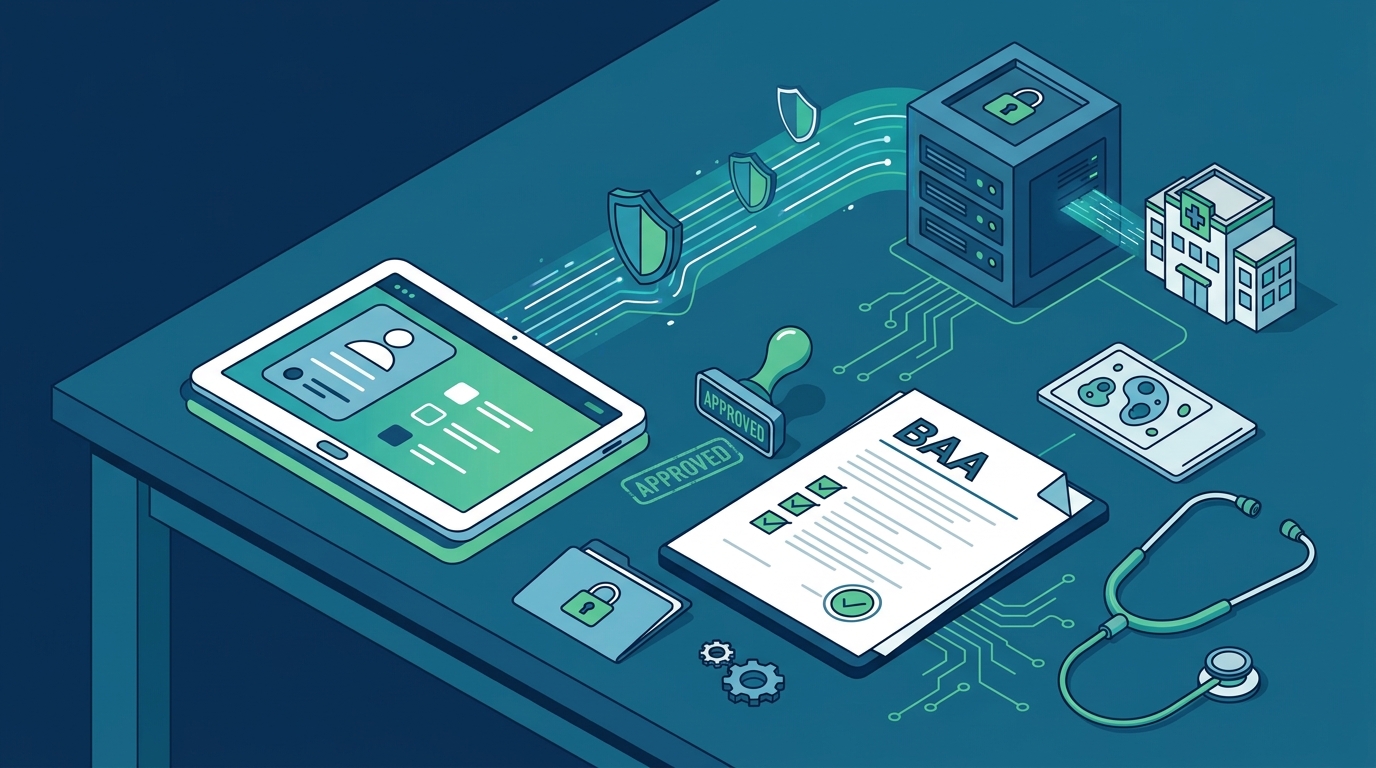
Essential BAA Components
| Component | Description | Importance | |||
|---|---|---|---|---|---|
| Safeguards | Specifies technical and administrative measures | Ensures data protection standards are met | Liability | Outlines financial and legal responsibility | Clarifies accountability for breaches |
| Termination | Conditions for ending the agreement | Allows removal of non-compliant vendors |
Technical Safeguards for AI Systems
Encryption and Access Control
Encryption is a process that converts data into a code to prevent unauthorized access. AI tools must encrypt PHI both at rest and in transit. This ensures that data is unreadable to anyone without the decryption key. Access control mechanisms must also be robust. Only authorized personnel should be able to access the AI system. Multi-factor authentication is a standard requirement for accessing systems that handle PHI.
Audit Controls and Integrity
Audit controls are hardware, software, and procedural mechanisms that record and examine activity in information systems. These logs are critical for detecting unauthorized access or misuse. AI systems must maintain detailed audit trails. These trails should record who accessed the data, when, and what actions were taken. Data integrity controls ensure that PHI is not altered or destroyed inappropriately. AIHEB Technologies integrates these controls into its software solutions to provide comprehensive protection.
How to Verify AI Vendor Compliance
Verifying an AI vendor's compliance requires due diligence. You cannot rely solely on marketing claims. You must request specific documentation and evidence. This process ensures that the vendor meets the legal and technical requirements of HIPAA. A structured verification process reduces risk and ensures long-term compliance.
Documentation Review
Technical Assessment
Common Compliance Mistakes to Avoid
Organizations often make critical errors when implementing AI tools. These mistakes can lead to non-compliance and potential penalties. Understanding these pitfalls helps you avoid them. Proactive management of AI compliance is essential for protecting patient data and your organization's reputation.
Assuming Compliance by Default
Many organizations assume that because a vendor is well-known, they are HIPAA compliant. This is a dangerous assumption. You must verify compliance independently. Do not rely on general trust. Request specific evidence of BAA execution and technical safeguards. This due diligence is your primary defense against non-compliance.
Inadequate Training
Key Takeaways
- AI tools can be HIPAA compliant if they execute a BAA and implement required safeguards.
- A Business Associate Agreement is a legal contract that defines the use and protection of PHI.
- Technical safeguards, including encryption and audit controls, are mandatory for AI systems handling PHI.
- Verify vendor compliance by reviewing their Security Risk Assessment and BAA template.
- Do not assume compliance based on vendor reputation; conduct independent due diligence.
- Staff training is a critical component of overall HIPAA compliance for AI tools.
- AIHEB Technologies provides AI solutions designed to meet these strict regulatory standards.
- Continuous monitoring is required to maintain compliance as regulations and technologies evolve.
Frequently Asked Questions
Can AI tools be HIPAA compliant?
Yes, AI tools can be HIPAA compliant. They must execute a Business Associate Agreement and implement the technical and administrative safeguards required by the HIPAA Security Rule.
What is a Business Associate Agreement?
Do all AI tools require a BAA?
Not all AI tools require a BAA. Only those that create, receive, maintain, or transmit Protected Health Information on behalf of a covered entity require a BAA.
How do I verify an AI vendor's compliance?
You can verify compliance by requesting their Security Risk Assessment, BAA template, and documentation of their technical safeguards. Conduct a technical assessment of their infrastructure. Learn more: 4000ai org.