%22%20style%3D%22color%3Argb(240%2C%3Bfont-family%3AArial%3B%22%3E4000AI%3C%2Fspan%3E%26nbsp%3B%3C%2Fspan%3E%3C%2FforeignObject%3E%3C%2Fsvg%3E)

Small businesses must verify data privacy compliance, implement robust security controls, and establish human oversight before deploying AI on customer data. This guide provides a comprehensive framework for AIHEB Technologies users and other organizations to ensure safe, compliant, and ethical AI integration. We cover regulatory requirements, technical safeguards, and governance models to protect your customers and your business reputation. For additional details, review the 4000ai org.
Data Privacy Compliance
Deploying AI on customer data triggers strict regulatory obligations. Small businesses often underestimate the legal exposure associated with automated decision-making. You must map your data flows to identify which regulations apply to your specific operations. For additional details, review the .
Regulatory Mapping
Compliance is not a one-size-fits-all solution. The General Data Protection Regulation (GDPR) applies to any business processing EU resident data, regardless of location. In the United States, state laws like the California Consumer Privacy Act (CCPA) and the Virginia Consumer Data Protection Act (VCDPA) impose specific rights on consumers. Regulatory mapping is the process of identifying which privacy laws apply to your data processing activities. AIHEB Technologies emphasizes this step because AI systems often process data in ways that traditional software does not, such as inferring sensitive attributes from non-sensitive inputs. For additional details, review the Customer Experience.
Consent and Transparency
Data Minimization
AI models do not need all your data to function effectively. Data minimization is the principle of collecting and processing only the data strictly necessary for the stated purpose. Before deployment, audit your datasets. Remove fields that are not essential for the AI model. This reduces your attack surface and lowers compliance costs. It also demonstrates good faith to regulators and customers. For additional details, review the Frequently Asked Questions.
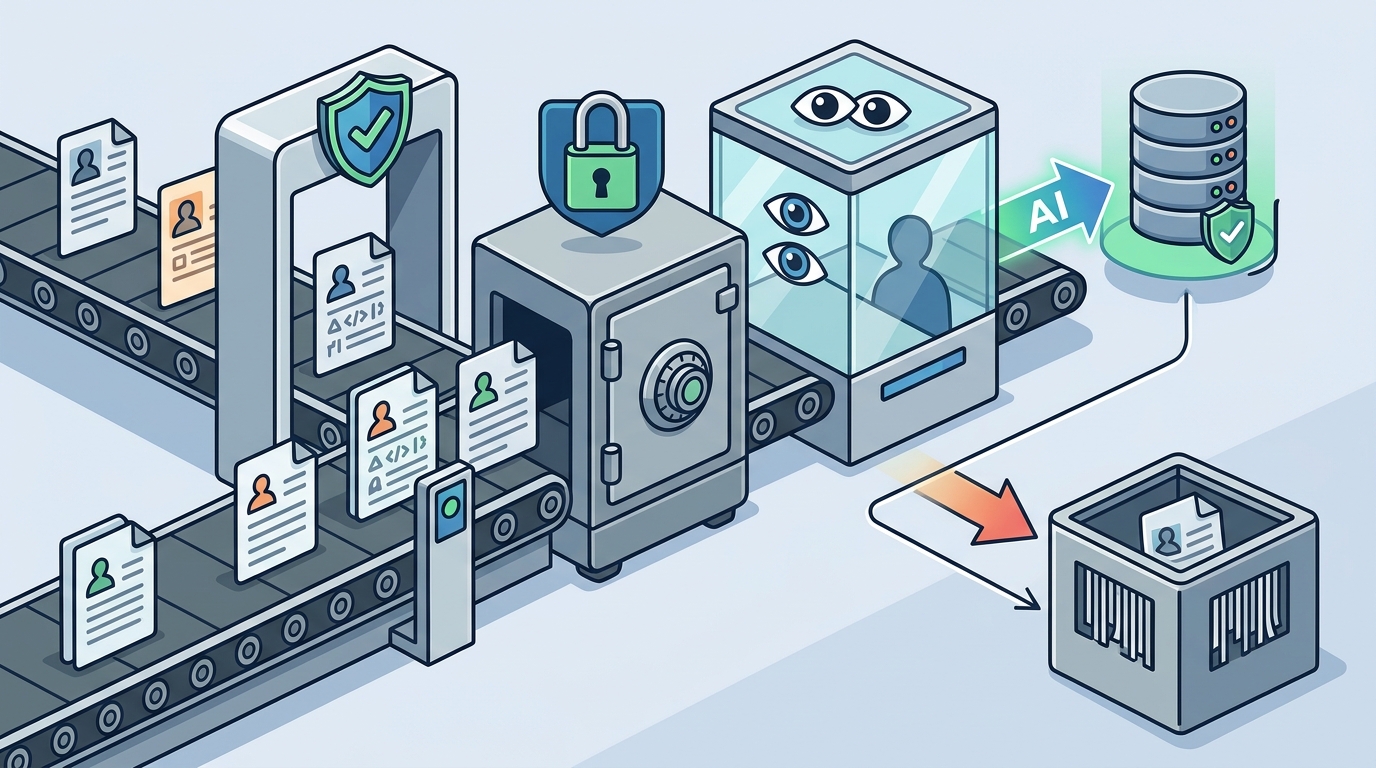
Data Security Controls
Security is the technical backbone of safe AI deployment. AI systems introduce new vulnerabilities, such as model inversion and prompt injection. You must layer traditional security controls with AI-specific safeguards. For additional details, review the About.
Encryption and Access Control
Encrypt data at rest and in transit. Use strong encryption standards like AES-256 for stored data and TLS 1.3 for data in motion. Implement role-based access control (RBAC) to ensure only authorized personnel can access customer data. AI systems often require broad access to training data. Limit this access to the minimum necessary scope. Regularly review access logs to detect anomalies.
Model Security
AI models are software assets that require protection. Model security is the practice of protecting AI models from unauthorized access, manipulation, or extraction. Store model weights securely. Use secure enclaves or hardware security modules (HSMs) to protect sensitive model parameters. Implement input validation to prevent prompt injection attacks. Test your models for vulnerabilities before deployment. AIHEB Technologies recommends continuous monitoring of model performance and security posture.
Incident Response
Have a clear incident response plan for AI-related breaches. Define roles and responsibilities. Establish communication protocols for notifying customers and regulators. Test your plan with tabletop exercises. A rapid response can mitigate damage and demonstrate accountability. Document all incidents and lessons learned. This documentation is crucial for regulatory audits.
Human Oversight Processes
AI systems are not infallible. Human oversight ensures that AI decisions align with business values and legal requirements. It provides a safety net for errors and biases.
Human-in-the-Loop
Implement human-in-the-loop (HITL) processes for high-stakes decisions. Human-in-the-loop is a design pattern where humans review and approve AI-generated outputs before they are finalized. For example, if an AI system recommends denying a loan, a human should review the decision. This reduces the risk of harmful errors. It also satisfies regulatory requirements for meaningful human review. Define clear criteria for when human review is required.
Bias and Fairness Audits
Accountability and Governance
Key Takeaways
- Map your data flows to identify applicable privacy regulations like GDPR and CCPA.
- Implement data minimization to reduce compliance risk and attack surface.
- Encrypt data at rest and in transit using strong standards like AES-256 and TLS 1.3.
- Protect AI models with secure storage and input validation to prevent attacks.
- Use human-in-the-loop processes for high-stakes AI decisions.
- Conduct regular bias and fairness audits to ensure equitable outcomes.
- Assign clear accountability for AI systems through a governance committee.
- Develop and test an incident response plan for AI-related breaches.
Frequently Asked Questions
What is the first step in deploying AI on customer data?
The first step is conducting a data privacy impact assessment. This helps you identify risks and determine which regulations apply to your operations.
Do small businesses need to comply with GDPR?
Yes, if you process data of EU residents. GDPR applies regardless of business size or location.
How can I protect my AI model from attacks?
Use secure storage, input validation, and continuous monitoring. Protect model weights and limit access to sensitive parameters.
What is human-in-the-loop in AI?
Human-in-the-loop is a design pattern where humans review and approve AI-generated outputs before they are finalized.
How often should I audit my AI models for bias?
Audit your models regularly, at least annually, and whenever you update the model or training data.
Who should be accountable for AI systems in my business?
Assign accountability to a specific individual or committee. This ensures clear ownership of AI performance and compliance. Learn more: 4000ai org.