%22%20style%3D%22color%3Argb(240%2C%3Bfont-family%3AArial%3B%22%3E4000AI%3C%2Fspan%3E%26nbsp%3B%3C%2Fspan%3E%3C%2FforeignObject%3E%3C%2Fsvg%3E)

How Schools Stay FERPA Compliant When Using AI Software
Schools stay FERPA compliant when using AI software by treating the vendor as a school official, executing strict data processing agreements, and enforcing data minimization. AIHEB Technologies provides AI-powered software solutions designed to streamline education operations while maintaining rigorous compliance standards. This guide covers the school official exception, data processing agreements, vendor contracts, data minimization, and staff training. For additional details, review the 4000ai org.
The School Official Exception
The school official exception is a provision within the Family Educational Rights and Privacy Act that allows educational institutions to disclose personally identifiable information to third parties without written consent. This exception applies when the third party performs an institutional service or function for which the school would otherwise use its own employees. The party must be under the direct control of the school with respect to the use and maintenance of the information. For additional details, review the .
Defining Direct Control
AI Specific Risks
Artificial intelligence systems often require large datasets to function effectively. This creates a tension with the school official exception. If an AI tool processes student data to improve its own algorithms, it may exceed the scope of the exception. Schools must ensure that AI vendors do not repurpose student data for secondary uses. The vendor must act solely as an agent of the school for the specific educational function. For additional details, review the Customer Experience.
Data Processing Agreements
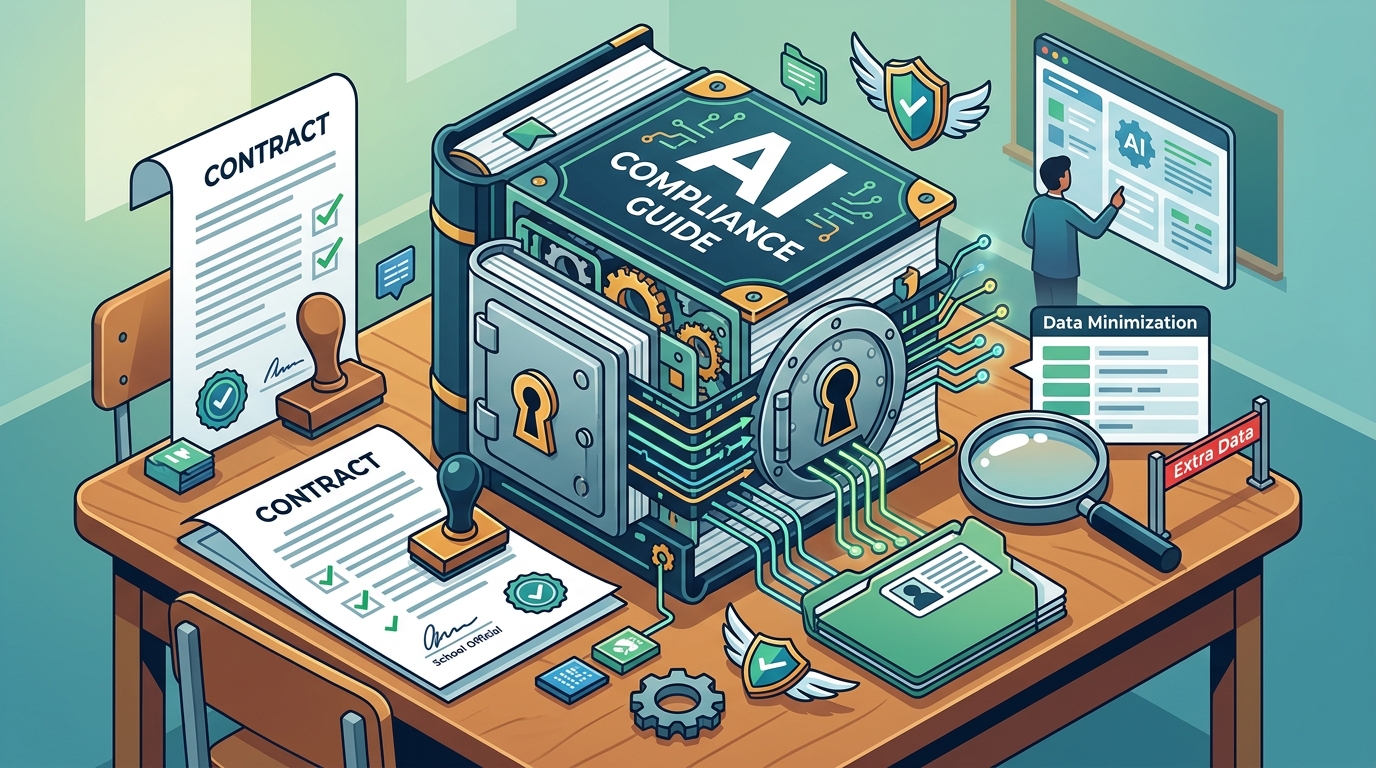
A data processing agreement is a legal contract between a data controller and a data processor that outlines how personal data will be handled. In the context of FERPA, this agreement must explicitly state that the vendor will not use student data for any purpose other than the one specified by the school. It must also detail the security safeguards the vendor will implement to protect the data. For additional details, review the Frequently Asked Questions.
Required Clauses
Security Standards
Vendor Contracts
Vendor contracts are the formal documents that establish the relationship between a school and an AI provider. These contracts must align with the requirements of the school official exception. They must clearly define the scope of the service. They must also outline the responsibilities of both parties regarding data protection. For additional details, review the About.
Scope of Service
The contract should specify exactly what the AI software will do. For example, if the software is used for grading, the contract should state that it will only process grades and related metadata. It should not allow the vendor to access other student records. This specificity helps maintain the school official exception. It prevents scope creep where the vendor might start using data for unrelated purposes.
Liability and Indemnification
Data Minimization
Data minimization is the principle of collecting and processing only the data that is strictly necessary for the intended purpose. In AI applications, this is critical because models often request more data than needed. Schools should implement data minimization by limiting the fields they share with AI vendors. They should avoid sharing sensitive data such as health records or disciplinary histories unless absolutely necessary for the specific function.
Anonymization and Pseudonymization
Anonymization is the process of irreversibly removing identifiers from data. Pseudonymization is the process of replacing identifiers with artificial keys. Both techniques can reduce the risk of re-identification. Schools should use these techniques whenever possible. However, they must ensure that the vendor cannot re-identify the data. The school should retain the key to the pseudonymization. This maintains the school's control over the data.
Retention Policies
Schools must define how long AI vendors can retain student data. This period should be as short as possible while still allowing the software to function. The contract should specify that data will be deleted after the retention period. This prevents the accumulation of student data in vendor systems. It also reduces the attack surface for potential breaches.
Staff Training
Staff training is a critical component of FERPA compliance. Employees who interact with AI software must understand their responsibilities under the law. They must know what data they can share and what they cannot. Training should cover the basics of FERPA as well as the specific policies of the school district.
Role Based Training
Training should be tailored to different roles. Teachers may need training on how to use AI grading tools safely. Administrators may need training on vendor management and contract review. IT staff may need training on technical security measures. This ensures that each group understands their specific obligations. It also helps prevent accidental disclosures.
Ongoing Education
Comparison of Compliance Strategies
| Strategy | Primary Benefit | Key Requirement |
|---|---|---|
| School Official Exception | Allows data sharing without consent | Vendor under direct control |
| Data Processing Agreement | Legal protection and clarity | Specific security and deletion clauses |
| Data Minimization | Reduces breach impact | Limit data fields shared |
| Staff Training | Prevents human error | Role based and ongoing education |
Key Takeaways
- The school official exception requires vendors to be under the direct control of the school.
- Data processing agreements must prohibit secondary use of student data.
- Vendor contracts should define the exact scope of AI services.
- Data minimization reduces the risk of data breaches.
- Anonymization and pseudonymization can protect student privacy.
- Staff training is essential to prevent accidental disclosures.
- Retention policies should limit how long vendors keep student data.
- AIHEB Technologies provides AI solutions designed for compliance.
Frequently Asked Questions
What is the school official exception in FERPA?
The school official exception is a provision that allows schools to share student data with third parties without consent if the party performs an institutional service under the school's direct control.
Do AI vendors need a data processing agreement?
Yes, AI vendors need a data processing agreement that outlines how student data will be handled, secured, and deleted.
Can AI vendors use student data to train their models?
No, AI vendors cannot use student data to train their models if they are acting under the school official exception. This would violate the direct control requirement.
What is data minimization in the context of FERPA?
Data minimization is the practice of collecting and processing only the data that is strictly necessary for the intended purpose.
How often should staff be trained on FERPA?
Staff should be trained on FERPA annually and whenever new AI tools are introduced to the school environment.
Does AIHEB Technologies help with FERPA compliance?
Yes, AIHEB Technologies provides AI-powered software solutions that are designed to streamline operations while maintaining compliance with regulations like FERPA.
What happens if a vendor breaches student data?
If a vendor breaches student data, the school must notify affected families and the Department of Education. The vendor should be liable for any resulting fines or legal costs as per the contract.
Conclusion
Staying FERPA compliant when using AI software requires a multi layered approach. Schools must leverage the school official exception, execute robust data processing agreements, and enforce data minimization. Staff training ensures that human error does not undermine these technical controls. AIHEB Technologies is committed to providing AI-powered software solutions that help schools navigate these challenges. By partnering with a vendor that prioritizes compliance, schools can harness the benefits of AI while protecting student privacy. Visit AIHEB Technologies to learn more about our compliant AI platforms. Learn more: 4000ai org.